Artificially Inspired: Week #7 When a Still Image Starts to Move, a Story Starts to Form
Image-to-video has quietly become one of the most powerful tools in our workflow.
For brands sitting on large libraries of static imagery, it opens up a huge opportunity - not to replace what already exists, but to re-experience it.
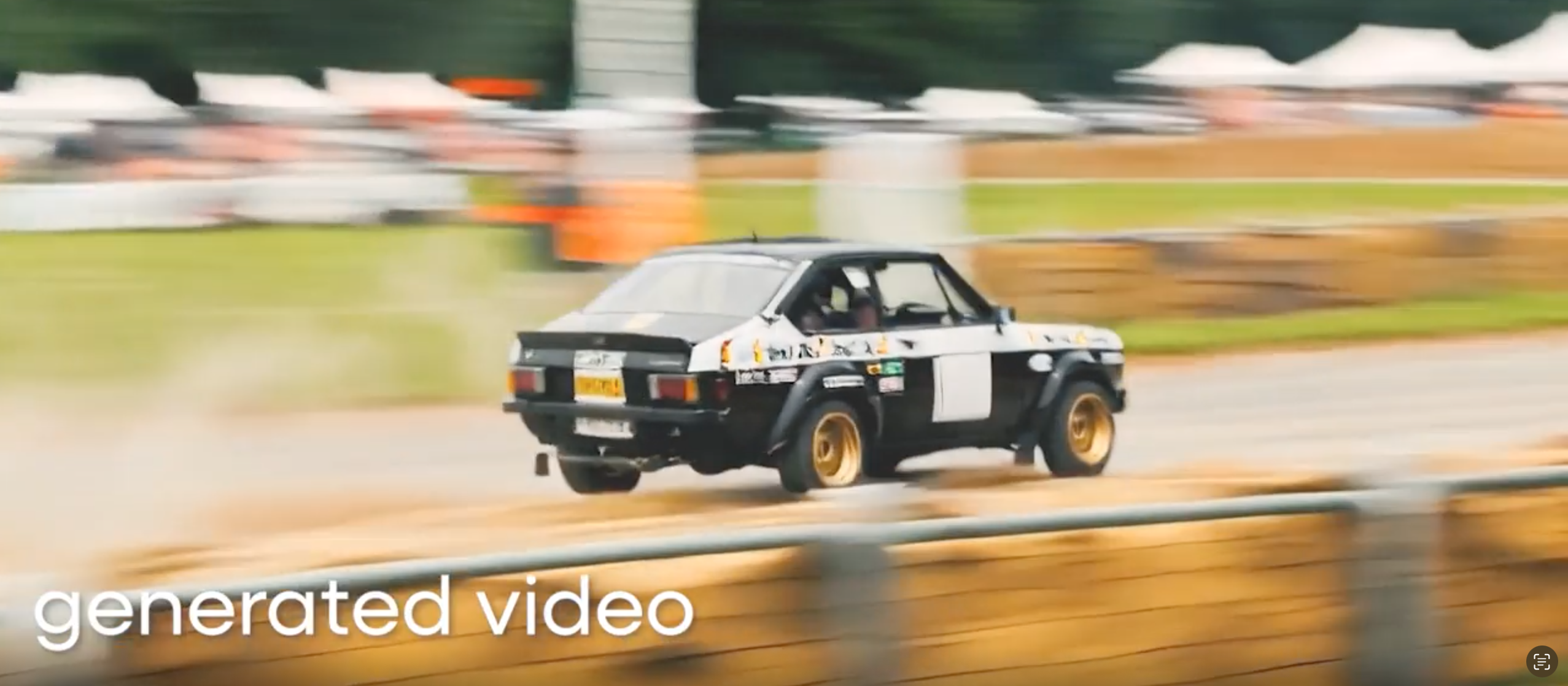
Last week, we showed a client something simple, but genuinely transformative:
their existing images, brought to life.
Camera moves.
Parallax.
Atmospheric motion.
Subtle texture.
Suddenly, a still becomes a story.
Small Moves. Big Shift.
The examples we shared were created using Bicester Motion imagery, used with permission and brought to life responsibly.
Nothing flashy.
Nothing over-produced.
Just a small test designed to explore what’s possible.
And that’s where image-to-video really earns its place.
It allows brands to:
- Extend the life of existing assets
- Unlock new formats and channels
- Add emotion and depth without reshooting
- Experience familiar imagery in ways that simply weren’t possible before
All without losing the integrity of the original work.
The Kind of AI We’re Excited About
For us, this is the real magic of AI right now.
Not spectacle.
Not shortcuts.
But smarter, more thoughtful ways to unlock value from what’s already there.
Tools that respect the original creative — while gently expanding what it can do.
For this test, we used Kling to generate the image-to-video outputs.
Simple input. Careful handling. Clear intent.
That’s the difference.
🔗 Read the full conversation on LinkedIn:https://www.linkedin.com/feed/update/urn:li:activity:7405275875388280833